
Opioid Use Disorder (OUD)
What it is, how treatment works, and what to expect.
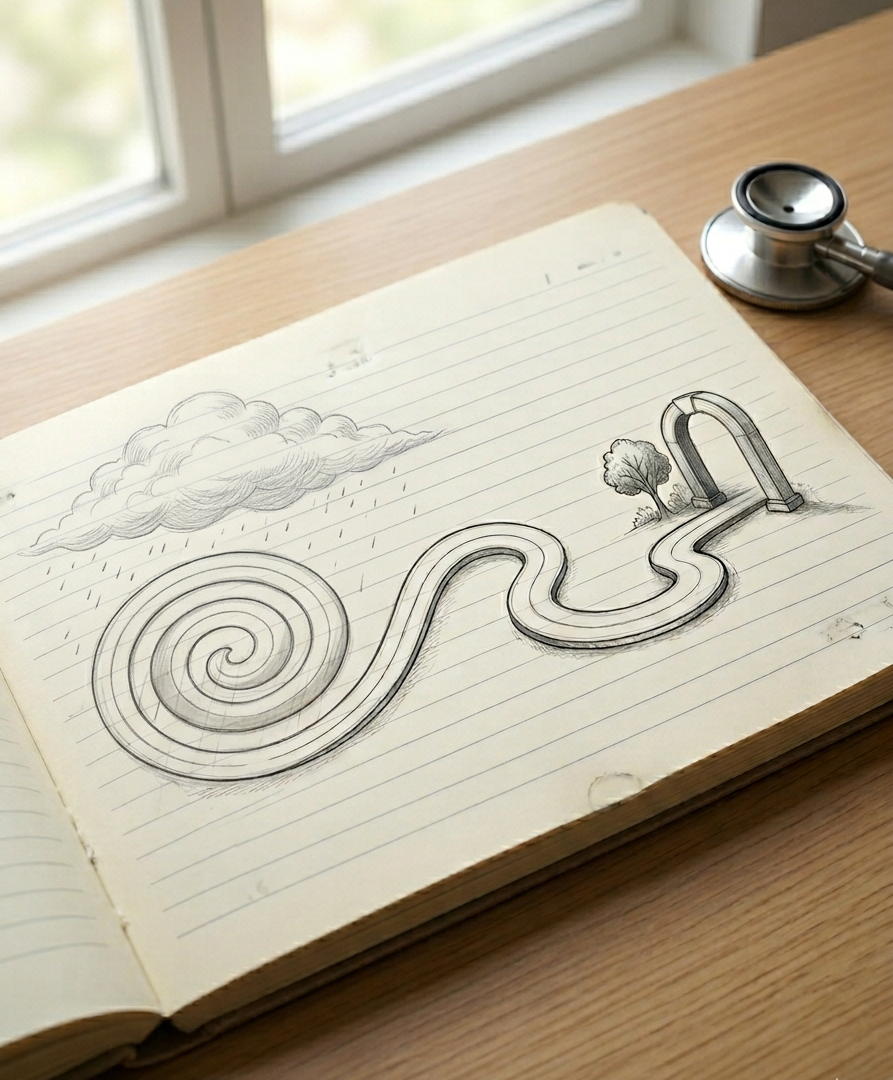
OUD is one of the most treatable chronic conditions in medicine, and one of the most undertreated. Effective medications exist, telemedicine makes them accessible, and recovery is not only possible but extremely likely with the right approach.
TL;DR
What you need to know if you’re short on time:
Opioid Use Disorder (OUD) is a chronic medical condition, not a moral failing. It results from predictable neurological changes caused by repeated opioid exposure, and it responds well to treatment.
OUD can develop from prescription opioids, heroin, fentanyl, and increasingly from kratom-derived products like 7-OH. The underlying biology and the treatment are essentially the same regardless of which opioid caused it.
Opioid withdrawal is genuinely miserable, but it is not medically dangerous for most people, and we can address it effectively through telemedicine.
Buprenorphine (Suboxone and others) is the most effective first-line treatment for OUD. It resolves withdrawal, blocks the effect of other opioids, and given enough time allows the brain to heal the conditioned reward pathways that drive relapse.
The goal of treatment is remission: getting your life back from OUD, fully and sustainably. Most people reach that goal. Duration of treatment matters: the longer you stay stable, the better your long-term outcomes.
What is Opioid Use Disorder?
Opioid Use Disorder is the medical term for addiction to opioids. The diagnosis applies regardless of which opioid is involved: prescription painkillers, heroin, illicitly manufactured fentanyl, or kratom-derived products like 7-hydroxymitragynine (7-OH). They work through the same receptor system, produce the same physiological dependence, and respond to the same treatments.
OUD develops because opioids are extraordinarily effective at activating the brain's reward circuitry. Every exposure releases a large dopamine signal, the brain's way of saying "that was important, do it again." With repeated exposure, tolerance develops, the nervous system adapts to require opioids for baseline function, and the brain encodes opioid-seeking as a high-priority conditioned behavior. None of this is a choice. It is a predictable biological response to a class of drugs that are powerful enough to override the brain's normal learning systems.
Opioids that commonly cause OUD include:
Prescription Opioids
Oxycodone, hydrocodone, hydromorphone, morphine, codeine, tramadol, and others prescribed for pain. Misuse of prescribed medications and diversion from other patients are both common pathways.
Fentanyl
A synthetic opioid 50–100 times more potent than morphine. Now the dominant opioid in the illicit US drug supply and the primary driver of overdose deaths. Also found as an adulterant in counterfeit pills and other substances.
Heroin
An illicit opioid that has been largely displaced by illicitly manufactured fentanyl in the current US drug supply. Most heroin available today contains fentanyl or fentanyl analogs.
Kratom derivatives (7-OH)
7-hydroxymitragynine (7-OH) is a semi-synthetic opioid derived from the kratom plant, sold legally in most states until recently. It is as potent as pharmaceutical opioids and has caused a rapid increase in new OUD cases. Learn more →
Diagnosis is based on 11 criteria, evaluated over the past 12 months. The presence of any two or more qualifies as OUD:
Using opioids in larger amounts, or for longer than you intended to
Persistent desire or repeated unsuccessful efforts to cut down or control use
Spending a significant amount of time obtaining, using, or recovering from opioids
Craving: a strong urge or compulsion to use
Repeated failure to meet obligations at work, school, or home because of opioid use
Continuing to use despite ongoing social or relationship problems it causes or worsens
Giving up or cutting back on activities you care about because of opioid use
Recurrent use in situations that are physically hazardous (e.g., driving, operating machinery)
Continuing to use despite knowing it's causing or worsening a physical or psychological problem
Tolerance: needing significantly more opioid to feel the same effect
Withdrawal: experiencing physical symptoms when you stop or cut back, or using to avoid them
Mild
2 - 3 Criteria Present
Moderate
4 - 5 Criteria Present
Severe
6+ Criteria Present
Severity does affect treatment recommendations, but it doesn't determine whether someone is “ready” or needs treatment. Even mild OUD causes real harm, and treatment works across the full spectrum.
Why OUD goes untreated so often
Despite affecting millions of Americans and being highly treatable, OUD remains dramatically undertreated. Stigma is the most significant barrier, contributing both to internal shame and external judgement that prevent people from asking for help. Many people spend years trying to manage OUD through willpower alone, or cycling through abstinence and relapse, without knowing that safe and effective medications exist.
Another barrier is a persistent belief, sometimes reinforced by well-meaning people, that using a medication to treat addiction is not "real" recovery. This belief is not supported by evidence, and it costs lives. Medications for OUD are the standard of care, and they are what makes sustained recovery possible for most people.
The Goal of Treatment
The goal of OUD treatment is remission: the resolution of the symptoms that define the disorder. In practical terms, that means stopping the opioid use that has caused harm, stabilizing the nervous system, and giving the brain enough time in a stable state to weaken the conditioned reward patterns that drive craving and relapse.
Remission is not just abstinence from a substance. It is the restoration of control over your own life, and the ability to make choices based on what matters to you rather than in response to a physiological compulsion.
Remission of OUD, in practice, means that none of the 11 OUD criteria are met, except cravings. Put another way, remission means you have regained full control, and you no longer feel compelled to keep engaging in a harmful pattern of behavior. We can often achieve this goal within a few days of beginning treatment, and by definition, it’s considered to be “sustained remission,” after a year of consistently being free of all OUD symptoms. Cravings may still occur occasionally, especially during the first few months of remission, which is normal and expected; their frequency and intensity diminish substantially with time in stable treatment.
How Treatment Progresses
Treatment begins with a conversation. You don’t need to be in withdrawal to have this conversation, and you don’t need to have an existing diagnosis or meet any prerequisites. We’ll discuss the problem you’re having, available treatment options, your preferred timing, and whether telemedicine is the right treatment setting. Buprenorpine (Suboxone) is an appropriate treatment choice for most patients who have OUD, and we can usually start it safely through telemedicine. Once we make that decision together, we’ll send prescriptions to your chosen pharmacy so we can get started without delay.
Starting buprenorphine: timing and the first dose
Buprenorphine works by binding very tightly to opioid receptors and partially activating them, enough to resolve withdrawal and block cravings, but not enough to produce euphoria. Because it binds so tightly, if it's started while other opioids are still occupying the receptors, it will rapidly displace them and cause a sudden drop in total opioid stimulation. This is called precipitated withdrawal, and it’s completely avoidable with the right timing.
The solution is to wait until your body has metabolized enough of the prior opioid so that receptors are free for buprenorphine to bind to comfortably. How long to wait depends on which opioid you've been using:
A
B
Fast-metabolizing opioids — wait 12–16 hours from last use
Oxycodone, hydrocodone, hydromorphone, heroin, mitragynine, and 7-OH are cleared from the body relatively quickly. Most patients can start buprenorphine comfortably after 12–16 hours. You should be feeling withdrawal before starting.
Slow-metabolizing opioids (fentanyl, methadone) — wait at least 24 hours, often longer
Fentanyl and methadone linger in tissues and are released slowly, so it takes longer for receptors to “open up” for buprenorphine. To get started as soon as possible and minimize withdrawal time, we typically use a modified induction method called Rapid Low Dose Initiation: starting at 1mg and adding 1mg per hour for 8 hours, then accelerating once the nervous system has acclimated. This minimizes precipitated withdrawal risk while achieving relief as quickly as possible. Other approaches (Bernese Method, micro-dosing) are also available depending on your situation and preferences.
The waiting period doesn't have to be miserable. We can prescribe non-opioid supportive medications to manage symptoms while you wait:
Clonidine
Reduces autonomic withdrawal symptoms — sweating, anxiety, elevated heart rate
Ondansetron
Controls nausea
Tizanidine
Reduces withdrawal discomfort and is helpful for sleep
Loperamide (OTC)
Controls diarrhea
Hydroxyzine
Reduces restlessness and anxiety; helpful for sleep
Acetaminophen/Ibuprofen (OTC)
Controls aches and pain
Finding the right dose
The average effective dose of buprenorphine for OUD is around 16mg once daily, but the right dose for any individual varies based on tolerance and metabolism. Because buprenorphine works quickly (full effect within an hour) we use a simple same-day titration approach on day one to find your dose efficiently rather than guessing.
For most patients stopping fast-metabolizing opioids, we start at 4mg and add 4mg per hour as needed until withdrawal is fully resolved. For fentanyl and methadone transitions, we use the slower RLDI approach described above. We check in daily for the first few days to make minor adjustments until we're confident the dose is right — meaning it relieves 100% of withdrawal, lasts a full 24 hours, and doesn't cause sedation.
Stabilization and what it feels like
Within days of starting buprenorphine at the right dose, most patients describe the same thing: they feel normal. Not high. Not sedated. Normal, for what may feel like the first time in a long time. Withdrawal is gone. The constant preoccupation with opioids fades. There is no tendency for the buprenorphine dose to increase over time, no chasing a high, no cycle of using and crashing.
If the starting dose was higher than average due to high prior tolerance, many patients find they can gradually and comfortably reduce to a typical maintenance dose of 16–20mg over two to three months without feeling any different. After that, the dose tends to stay stable, and it's often not worth focusing on it beyond routine check-ins.
Maintaining Stability: the most important phase
Stabilization happens in days. Healing takes longer. The goal of maintenance is to give your brain the time it needs in a stable, protected state, to weaken the conditioned reward pathways that drive relapse.
Opioids hijack the brain's dopamine reward system, encoding opioid-seeking as a high-priority conditioned behavior. Specific cues, like people, places, emotions, and physical sensations, become associated with opioid use and trigger automatic cravings long after physical withdrawal has passed. While on stable treatment, these conditioned pathways begin to weaken slowly, as the brain is repeatedly exposed to those same cues without an opioid response. That process takes time.
Buprenorphine's long half-life (over 24 hours) is what makes this healing possible. Once-daily dosing maintains stability so that opioids are not used in response to anything, so the conditioned associations begin to degrade. This highlights the importance of correct dosing: less is not more especially in early OUD treatment. If a dose is inappropriately low, then you will start to experience some withdrawal before your next dose: if that happens, then then withdrawal → use cycle is maintained rather than permitted to fade.
We start to see OUD relapse rates decrease meaningfully after about two years of stable treatment. That may sound long, but consider what you're actually doing during those two years: living your life, rebuilding relationships, working toward goals, with the active symptoms of addiction already behind you. That is recovery.
The Medications
Buprenorphine
Suboxone (sublingual) · Zubsolv (sublingual) · Generic (tablets) · Sublocade (injectable) · Brixadi (injectable)
Buprenorphine is the most effective medication we have for OUD, and the right first-line choice for most patients. It is a partial opioid agonist, meaning it binds to the same receptors as other opioids but only partially activates them.
Three properties make it uniquely effective:
The ceiling effect: beyond a therapeutic dose, more buprenorphine produces no meaningful additional effect, including no additional respiratory depression. This is why buprenorphine overdose in isolation is extremely rare, and why dose escalation to "chase a high" is not something we see.
The blockade effect: because it binds so tightly to the mu-opioid receptor, other opioids cannot effectively compete for receptor binding while buprenorphine is present. A person at a therapeutic dose who uses heroin, fentanyl, or 7-OH on top of it will feel little to nothing. Slips during treatment do not have to become relapses because the blockade removes the reinforcing effect.
The stability effect: its half-life of over 24 hours means once-daily dosing maintains consistent receptor occupancy with no cycling between intoxication and withdrawal. This breaks the short-acting opioid pattern that reinforces dependence, and allows the brain to begin healing the conditioned reward pathways over time.
Sublingual formulations (Suboxone, Zubsolv, and generics) are usually taken once daily, sometimes more often. Long-acting injectable formulations (Sublocade once monthly, Brixadi weekly or monthly) are administered in a clinical setting or pharmacy, which removes the daily dosing decision and provides consistent steady-state levels, a good fit for patients who prefer it.
Most Suboxone and Zubsolv formulations contain naloxone alongside buprenorphine. The naloxone is a public health measure to discourage injection misuse, and it has no effect when the medication is taken sublingually as directed. It is not responsible for the blockade effect. For a detailed explanation, we have a longer article on buprenorphine →
Naltrexone
Vivitrol (injectable) · Generic (tablets)
Naltrexone is a pure opioid receptor blocker. Unlike buprenorphine, it does not activate opioid receptors at all; it simply occupies them and prevents any opioid from producing an effect. It has no opioid activity, no abuse potential, and requires no DEA scheduling.
The critical requirement is that a patient must be completely off all opioids, including buprenorphine, for at least seven days before starting naltrexone. This makes it a more difficult starting point for most patients with active OUD, which is one reason buprenorphine tends to be more effective in real-world settings: adherence is significantly higher.
Naltrexone has two important roles in OUD care. First, for patients who have already stabilized on buprenorphine and choose to eventually stop, transitioning to extended-release injectable naltrexone (Vivitrol) provides continued relapse protection without maintaining any opioid tolerance. Second, for the rare patient who strongly prefers a non-opioid treatment from the outset and has already successfully detoxed, naltrexone is a reasonable option. We'll discuss whether it fits your situation honestly.
Methadone
Generic (liquid solution)
Methadone is a full opioid agonist with a long half-life, used for OUD treatment since the 1960s. It is highly effective, and in some cases more effective than buprenorphine for patients with very high opioid tolerance who have not succeeded with other treatments. However, it can only be dispensed through federally licensed Opioid Treatment Programs (OTPs), which require in-person daily dosing initially and cannot be prescribed through telemedicine.
For patients who have not found adequate relief with buprenorphine at appropriate doses, we can help identify OTP programs and coordinate a transition to in-person methadone treatment. For the large majority of patients, including those with high-tolerance fentanyl or 7-OH use, buprenorphine at adequate doses is effective, and we have experience with approaches that work for high-tolerance.
Support
Medications work best alongside meaningful support, but "support" doesn't mean mandatory therapy or group meetings. What the evidence actually supports is broader and more flexible than that.
What matters is regular, meaningful engagement in activities that involve at least one other person. That could be a peer support group like SMART Recovery or NA, individual therapy, a structured exercise habit shared with someone, a job you find purposeful, or a hobby that gives you both a sense of accomplishment and some accountability to others. The common ingredients are meaning and connection.
Some patients do well with medication alone, especially in the early phase of treatment, and we won't require behavioral programming as a prerequisite for prescribing. What we will do is check in on how things are going beyond the medication, and point toward resources that might help if you're struggling to find traction in other parts of your life: whether that's untreated depression or anxiety, difficulty sleeping, relationship strain, or the absence of a clear sense of direction.
If and When Treatment Stops
Buprenorphine is safe and effective for long-term use, and there is no clinical requirement to stop. For many patients, the right answer is to continue treatment indefinitely, the same way a person with any chronic medical condition continues effective medication.
For patients who choose to eventually stop buprenorphine, tapering slowly is essential. A standard approach is to reduce the dose by 2mg every two to four weeks. At low doses, the steps get smaller: from 2mg to 1mg, then 0.5mg, then 0.5mg every other day, then stopping. Stopping abruptly from a full therapeutic dose will cause withdrawal.
After completing a buprenorphine taper, transitioning to extended-release injectable naltrexone (Vivitrol) is worth considering. It provides ongoing opioid blockade without any opioid activity, reduces relapse risk, and requires only a once-monthly injection. Starting Vivitrol requires being completely off buprenorphine and all other opioids for at least seven days.
If OUD symptoms recur after stopping treatment, resuming buprenorphine promptly is the right decision, not a setback. Relapse risk decreases with time, but it does not reach zero, and the response to restarting treatment is typically fast and effective. There is no restart penalty, no judgment, and no loss of progress from the time previously spent in treatment.
Conclusion
What This Means If You're Thinking About Treatment
Perhaps you're struggling with opioid use yourself, or know someone who is.
Opioid Use Disorder is a well-understood chronic medical condition, and we have a highly targeted treatment available that addresses both the immediate symptoms of withdrawal and the long-term relapse risk of OUD. Buprenorphine works by achieving stability quickly, but ultimately, OUD is treated by maintaining that stability for years.
OUD treatment is also commonly misunderstood. Perhaps the most harmful misunderstanding is that because you experience withdrawal if you stop buprenorphine too quickly, that makes it harmful like other opioids. Addiction is not as simple as withdrawal; it’s a persistent conditioned pattern of behavior that you can’t stop. It takes control of your life through constant preoccupation with the object of your addiction. Effective treatment for OUD is precisely the opposite: it provides safety and stability over time that frees you to focus on your life while long-term healing happens in the background.
OurEra and Dr. Brian Clear provide reliable telemedicine-based care for opioid use disorder, including use of buprenorphine, anywhere in California.