
Buprenorphine (e.g. Suboxone)
What is it? How does it work? Why is it important?
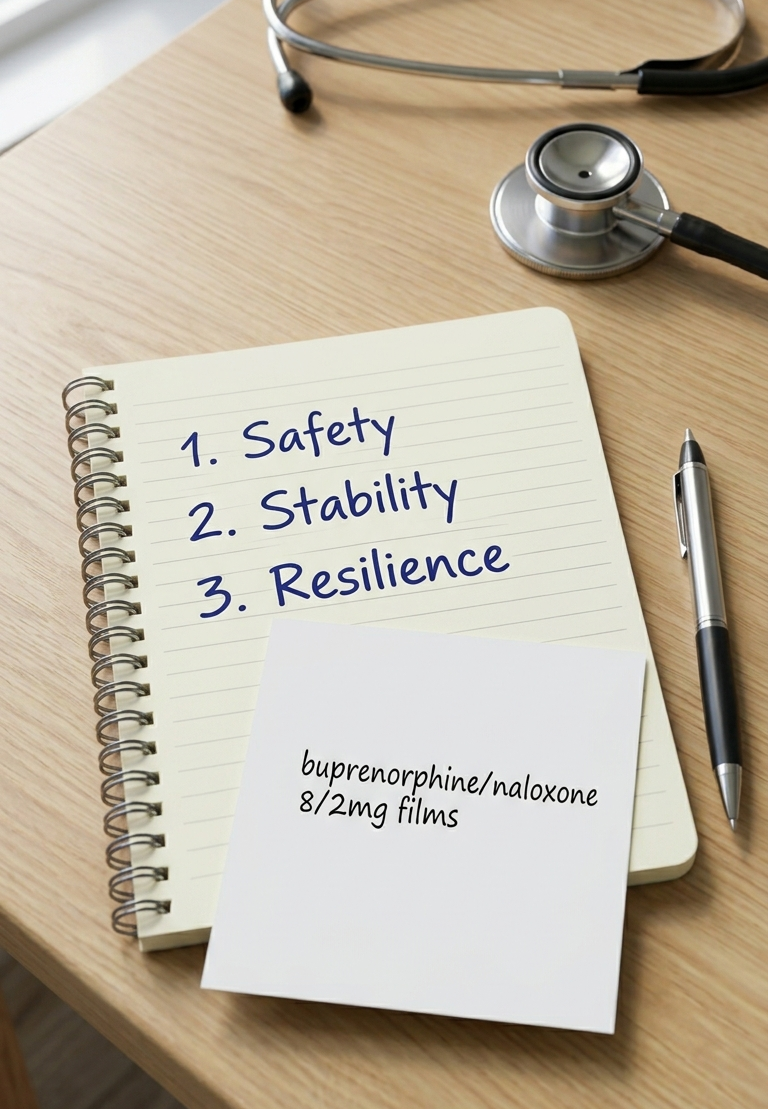
Buprenorphine is an important and highly effective medication that’s also commonly misunderstood and under-prescribed. Understanding why it works so well makes a difference in treatment success and satisfaction for anyone experiencing problems related to opioid use.
TL;DR
What you need to know if you’re short on time:
Buprenorphine is a partial opioid agonist with 3 unique properties that make it highly effective for Opioid Use Disorder (OUD): a ceiling effect, a blockade effect, and a long half-life.
The unique properties of buprenorphine address both dimensions of opioid use disorder: physical dependence/withdrawal, and the longer-lived brain reward conditioning that drives cravings and relapse risk.
Buprenorphine is the only significant active ingredient in Suboxone, Zubsolv, Subutex (brand discontinued), Sublocade, and Brixadi.
The naloxone component of Suboxone and Zubsolv is a safety measure to make these medications undesirable to inject. It is inert when used as directed and does not affect how either medication works.
Buprenorphine has been FDA approved for OUD since 2002 and is supported by more clinical evidence than nearly any other treatment in addiction medicine.
History and Pharmacology
Buprenorphine was first synthesized in the 1960s by researchers at Reckitt & Colman (now Reckitt Benckiser) in England, originally developed as a potent pain reliever. Its unusual pharmacological profile, partial activation of opioid receptors with a ceiling on respiratory depression, caught the attention of addiction medicine researchers, who recognized its potential as a treatment for opioid dependence.
For decades, access to buprenorphine for addiction treatment in the United States was limited to specialized clinics. That changed in 2000 with the Drug Addiction Treatment Act, and in 2002 the FDA approved Suboxone, the combination of buprenorphine and naloxone, specifically for the treatment of opioid use disorder. For the first time, physicians in outpatient settings could prescribe a medication-based treatment for OUD, outside of methadone clinics.
In 2023, the final X-waiver requirement was eliminated, allowing any licensed prescriber to offer buprenorphine treatment. What was once a specialty medication is now accessible through primary care, telehealth, and urgent care settings across the country.
What is buprenorphine, pharmacologically?
Opioids work by binding to opioid receptors, primarily the mu-opioid receptor, throughout the brain, spinal cord, and body. A full agonist like oxycodone, fentanyl, heroin, or methadone binds to these receptors and activates them completely. Higher doses produce stronger effects in a near-linear relationship, including euphoria, sedation, and, at high enough doses, life-threatening respiratory depression.
Buprenorphine is a partial agonist at the mu-opioid receptor. It binds to the same receptor, but only partially activates it. This distinction is foundational to everything that makes buprenorphine clinically remarkable. It also has unusually high receptor affinity (it binds more tightly to the mu receptor than almost any other opioid), and an exceptionally long duration of action.
Together, these features produce three properties that are directly responsible for buprenorphine's effectiveness in treating OUD.
Unique Properties of Buprenorphine
Buprenorphine's effects plateau at moderate doses. Beyond a certain dose, more buprenorphine produces negligible additional effect, including negligible additional respiratory depression or dopamine release. This is the basis for its wide safety margin.
Ceiling Effect
Because buprenorphine binds so tightly to the mu opioid receptor, it physically occupies the receptor and prevents other opioids from attaching. At appropriate doses, it limits the effects of any additional opioids taken on top of it. This is the basis for its effective relapse prevention.
Blockade Effect
Buprenorphine's half-life in the body is over 24 hours, making once-daily dosing reliably effective for most patients. Stable blood levels mean no peaks and troughs, and no cycling between intoxication and withdrawal.
This stability breaks the pattern of reinforcing the brain’s conditioned opioid craving and reward cycle. Without reinforcement, this conditioning weakens over time.
Stability
The ceiling effect provides safety
Full opioid agonists have a dose-response curve with no upper limit. The more you take, the stronger the effect, until breathing slows and stops. With repeated use, the nervous system adapts to protect itself by building tolerance, and the person experiencing addiction then adapts by using more and more opioid to overcome tolerance and achieve the desired effect. There’s no limit until the cost of sustaining the habit becomes unbearable, or until overdose occurs.
With buprenorphine, the dose-response curve flattens. Once you reach a certain dose, typically 8–24mg daily, taking more does not meaningfully increase the effect. A person who doubles their buprenorphine dose accidentally, or deliberately, will not double the effect unless they are on an unusually low dose (e.g. 2mg). This protects against overdose, and it also protects against dose escalation to try to “chase” a high. At a stable therapeutic dose there’s simply no high to chase, and no amount of dose escalation can overcome that.
The blockade effect provides resilience
Other opioid use becomes unrewarding and non-reinforcing when on a therapeutic dose of buprenorphine. Because buprenorphine occupies the mu opioid receptor with such high affinity, other opioids essentially can’t compete for receptor binding while buprenorphine is present. A person taking an adequate daily dose of buprenorphine who uses heroin, fentanyl, or any other opioid on top of it will typically feel little or no high from the additional use. The receptor is just not available.
Slips happen, especially in early treatment. A slip only turns into a relapse when it results in a loss of control, and buprenorphine’s blockade effect maintains control.
There’s a common myth that using another opioid when taking buprenorphine may make you sick or may even be dangerous: this is false. If you use another opioid while on buprenorphine, it will have a markedly reduced ability to cause a high or cause overdose.
Another myth is that anesthesia, like during surgery, won’t work if you’re on buprenorphine: this is also false. The short term pain relieving effect of other opioids still works when on buprenorphine, although higher doses may be required. Patients on buprenorphine can have surgery, including emergency surgery when needed. It is not recommended to stop buprenorphine for surgery, although in some cases a temporary dose reduction may be helpful.
Stability provides lasting healing over time
Short-acting opioids create cycles. Each dose wears off. Withdrawal begins. The urge to use in order to feel "normal" again drives another dose. This cycle — relief, wearing off, withdrawal, relief — is physically punishing and psychologically reinforcing. It trains the brain to associate opioid use with restoration of normal function. The brain even goes a step further and generalizes this: it will want an opioid to cope with stress, grief, fatigue, and other hardship that may have nothing to do with opioid withdrawal. This is the mechanism that makes OUD so tenacious and relapse so common without treatment, even years after physical withdrawal has passed.
Buprenorphine's long half-life breaks this reinforcement cycle. Once-daily dosing means you’re not taking an opioid in response to any particular trigger. At a correct dose there is no wearing off or withdrawal, just maintenance of normalcy. The body and brain experience a continuous steady state, and over time will begin to “forget” the strong association between taking opioids and feeling relief from stressors. Stability over time fosters healing.
Opioid Use Disorder
To understand why buprenorphine works so well for OUD, it helps to understand what OUD actually is. It is not simply physical dependence, and it is not simply a matter of willpower. OUD has two distinct, overlapping dimensions, and buprenorphine addresses both.
Dimension one: physiologic dependence and withdrawal
When opioids are present regularly, the nervous system adapts. Opioid receptors down-regulate. The brain adjusts its baseline to account for the continuous opioid signal. Over days to weeks of regular use, a new set point is established, one that requires opioids to maintain equilibrium.
When opioids are removed, that adapted system is thrown off balance. The result is withdrawal: pain, muscle cramps, restlessness, insomnia, anxiety, nausea, sweating, and often a sense of dread. Withdrawal from opioids is rarely medically dangerous in healthy individuals, but it is genuinely terrible.
Buprenorphine directly resolves physiologic withdrawal. By partially activating the same receptors, it re-establishes equilibrium without producing euphoria. Withdrawal symptoms begin to improve, usually within 30–60 minutes of the first dose, and can often be resolved entirely within a few hours. The physical dimension of OUD is addressed very quickly.
Dimension two: dopamine-mediated reward conditioning
The changes in brain reward circuitry that drive cravings and relapse can persist for months to years, long after physical withdrawal is gone. This is why stopping opioids is rarely the hard part, staying stopped is where most people struggle, and it has little to do with willpower.
Opioids cause a large release of dopamine in the brain's reward system, specifically in the mesolimbic pathway, sometimes referred to as the "reward circuit." Dopamine is the brain's signal for "that was important, remember it, do it again." Under normal circumstances, this system evolved to reinforce survival behaviors: food, connection, sex, achievement.
Opioids hijack this system. Every use releases a large, unearned dopamine surge. The brain begins to encode opioid use as a high-priority behavior. Specific cues like people, places, emotions, physical sensations, become associated with opioid use and begin to trigger dopamine-driven cravings. This is a conditioned reflex, wired into the circuitry of the brain.
These conditioned pathways do not disappear when opioids are removed. They fade slowly, over months to years, as the brain is exposed to those same cues without the opioid response. This is why people who have been abstinent for months, or even years, can experience a sudden, powerful craving triggered by a smell, a neighborhood, or an emotional state they haven't felt since they were using.
This is also where buprenorphine's long half-life becomes critical as a treatment tool, not just a pharmacological convenience. Time in stable treatment is the therapy. Each day without opioid peaks, withdrawal valleys, and dopamine surges from use is a day the brain's reward circuitry begins to normalize. The conditioned pathways weaken. The cues lose their power. That process takes time, often years of consistent treatment, and buprenorphine makes it possible to give the brain the time it needs without white-knuckling through cravings on the edge of relapse.
How Treatment with Buprenorphine Progresses
Starting Buprenorphine
Buprenorphine’s high opioid receptor binding affinity means that if it’s started while other opioids are present, it will effectively “push” other opioids off the receptor and replace them. This effect is so strong that buprenorphine, in a pinch, has been used to reverse opioid overdose when Narcan is not available: it will displace fentanyl and other opioids, and quickly lower the total amount of opioid receptor activation (due to its ceiling effect). This is a fascinating effect, but for a patient just getting started on buprenorphine who is not actively experiencing an overdose, we don’t want to experience a rapid lowering of opioid stimulation, so we need to slow slow down just a bit for a comfortable start.
To start buprenorphine comfortably, a patient needs to wait until they have enough “free” opioid receptors for buprenorphine to bind without displacing and replacing stronger opioids. If we’re stopping fast-metabolizing opioids like hydrocodone, oxycodone, heroin, mitragynine, or 7-OH, this usually means waiting 12-16 hours from last use to start buprenorphine. If we’re stopping slow-metabolizing opioids like fentanyl or methadone, this means waiting at least 24 hours from last use to start buprenorphine.
Waiting 12-24 hours is uncomfortable but doesn’t have to be miserable. We can use non-opioid supportive medications as needed to address symptoms, which may include: clonidine (treats withdrawal), tizanidine (treats withdrawal, helpful for sleep), hydroxyzine (treats restlessness, helpful for sleep), ondansetron (treats nausea), loperamide (treats diarrhea), and OTC acetaminophen or ibuprofen (treats aches and pain), to minimize any disruption to your life when starting buprenorphine.
Stabilizing on the Right Dose
The average effective dose of buprenorphine for OUD is 16mg once daily. The correct, effective dose for any one person though varies based on their metabolism and tolerance. Fortunately, buprenorphine works quickly, and you’ll feel the full effect within an hour, so we use a simple approach of hourly dose increases on day 1 to find the right dose.
If you’re stopping fast-metabolizing opioids (oxycodone, heroin, 7-OH…), most commonly we start at 4mg of buprenorphine and add another 4mg every hour as needed until withdrawal is relieved.
If you’re stopping slow-metabolizing opioids (fentanyl, methadone), there are several approaches to achieve relief as quickly as possible while minimizing risk of a withdrawal reaction (aka “precipitated withdrawal”). The method we find to be preferred for most patients is called Rapid Low Dose Initiation: you start with 1mg and add another 1mg every hour for 8 hours. After eight 1mg doses, you’ve effectively acclimated your nervous system to buprenorphine, and we can then speed up and add 4mg as needed until withdrawal is relieved. At OURera, we’re also experienced with other effective approaches when preferred, such as the Bernese Method, Micro-Dosing, or Macro-Dosing.
We target fast relief of withdrawal on day 1, then we check-in daily to make minor dose adjustments as needed until we’re confident that we’ve found the right dose for you. The right dose relieves 100% of withdrawal, with no adverse effects such as sedation, and lasts a full 24 hours.
Maintaining Stability
This is the most important phase, and we reach it after only a few days. Withdrawal is gone. You can stop feeling constantly preoccupied with opioids, and instead focus on the life and goals that matter to you. That’s it; keep doing that.
There is no tendency for a buprenorphine dose to increase over time. If you needed an above-average initial dose to relieve withdrawal, most patients can slowly decrease that to an average 16 or 20mg daily dose over 2-3 months without feeling any different. Otherwise the dose tends to stay the same, and it’s often best not to focus on it.
The goal of maintaining stability is to give your brain the time it needs to weaken the cycle of opioid seeking in response to feeling bad. This is a conditioned brain pathway, like a traumatic memory. It’s much longer-lived than withdrawal. Consider this: How long does it take to “forget” a conditioned response to a traumatic experience? With effective support that prevents reinforcement of the cycle you’re trying to weaken, it takes at least 2 years for an average person. Similarly, we start to see OUD relapse rates decrease after about 2 years of stable treatment.
That may seem like a long time, but consider what you’re actually doing during this time: “focus on the life and goals that matter to you. That’s it; keep doing that.” Live your life. That’s not to say it’s easy, even with the active symptoms of addiction already behind you. This is where other support comes in. If you’re struggling to find rewarding goals, meaning, or success, then resources like group support, individual therapy, and treatment of depression and other conditions can be helpful. Not everyone wants or needs this, and that’s ok too if you’re meeting your goals without additional support.
If and When Treatment Stops
Buprenorphine is safe and effective for the long-term treatment of OUD, and there is no clinical requirement to stop. Treatment should continue for as long as it continues to be helpful.
If and when a patient decides to stop treatment with buprenorphine, it is tapered slowly so that withdrawal does not develop. A common tapering schedule is to decrease a dose by 2mg every 2-4 weeks. Once you reach a 2mg daily dose, then you decrease by half the dose every 2-4 weeks until off: e.g. 2mg daily → 1mg daily → 0.5mg daily → 0.5mg every-other-day → stop.
After stopping buprenorphine, it may be helpful to transition to extended release naltrexone (Vivitrol), a long-acting opioid receptor blocker that reduced relapse risk without activating opioid receptors at all. It’s important to be completely off of buprenorphine and all other opioids for at least 7 days before starting Vivitrol.
Naloxone
It’s the other ingredient in Suboxone and Zubsolv, but it’s less important than you might think
Suboxone contains two active ingredients: buprenorphine and naloxone, combined in a 4:1 ratio. The naloxone component is a common source of confusion.
Naloxone is a pure opioid antagonist (blocker). It binds to opioid receptors and blocks them without activating them at all. It is the same medication used in Narcan nasal spray and in emergency rooms to reverse opioid overdoses. When given intra-nasally or intravenously, it works within 2-3 minutes and lasts about 30 minutes. There’s a reason you don’t give Narcan by mouth to reverse overdose: it doesn’t do anything.
Naloxone is in Suboxone only to discourage injection. When Suboxone is taken sublingually (dissolved under the tongue, as intended), the naloxone is poorly absorbed. Of what little is absorbed (less than 10%) most is inactivated by the liver before it reaches the brain or any other organ. The naloxone has no effect when the medication is used as directed, and it is not responsible for the blockade effect of buprenorphine. It’s also not responsible for withdrawal reactions (precipitated withdrawal) that may occur due to starting buprenorphine from other opioids without waiting for free receptors to become available.
The widespread addition of naloxone to buprenorphine products is an example of a public health intervention. We know that some amount of any prescribed controlled substance will find its way to the illicit market (diversion). In the case of buprenorphine, manufacturers have built-in a safety mechanism to reduce the potential harm of diversion: the naloxone. So, we’re not prescribing buprenorphine/naloxone to prevent you, personally, from injecting it. It’s about improving the overall public safety profile of buprenorphine.
The role of Buprenorphine without Naloxone
Long-acting injectable buprenorphine products (Sublocade, Brixadi) do not contain naloxone because there’s no need: these are administered only by clinicians or pharmacists in clinical settings and cannot be diverted at scale.
There is a discontinued brand, Subutex, that contained buprenorphine without naloxone. Before Suboxone was established to be safe in pregnancy, Subutex was often preferred for pregnant patients.
Generic buprenorphine tablets without naloxone are still produced and can be useful for patients with severe liver disease who have impaired naloxone metabolism or other sensitivity to naloxone.
Conclusion
What This Means If You're Thinking About Treatment
Perhaps you're struggling with opioid use yourself, or know someone who is.
Opioid Use Disorder is a well-understood chronic medical condition, and buprenorphine is a highly targeted treatment that addresses both the immediate symptoms of withdrawal and the long-term relapse risk of OUD. Buprenorphine works by achieving stability quickly, but ultimately, OUD is treated by maintaining that stability for years.
Buprenorphine is also commonly misunderstood. Perhaps the most harmful misunderstanding is that because you experience withdrawal if you stop buprenorphine too quickly, that makes it harmful like other opioids. Addiction is not as simple as withdrawal; it’s a persistent conditioned pattern of behavior that you can’t stop. It takes control of your life through constant preoccupation with the object of your addiction. Effective treatment for OUD is precisely the opposite: it provides safety and stability over time that frees you to focus on your life while long-term healing happens in the background.
OurEra and Dr. Brian Clear provide reliable telemedicine-based care for opioid use disorder, including use of buprenorphine, anywhere in California. No prior experience with treatment is required. Or if you’ve tried before without success, we’ll take that experience and build on it to do better.